


Super User
This is my user desription. Lorem ipsum dolor sit amet, consetetur sadipscing elitr, sed diam nonumy eirmod tempor invidunt ut labore et dolore magna aliquyam erat, sed diam voluptua. At vero eos et accusam et justo duo dolores et ea rebum. Stet clita kasd gubergren, no sea takimata sanctus est Lorem ipsum dolor sit amet. Lorem ipsum dolor sit amet, consetetur sadipscing elitr, sed diam nonumy eirmod tempor invidunt ut labore et dolore magna aliquyam erat, sed diam voluptua. At vero eos et accusam et justo duo dolores et ea rebum. Stet clita kasd gubergren, no sea takimata sanctus est Lorem ipsum dolor sit amet.
Edinburgh Science Festival
On the weekend of April 15, 2023 SCHPHRPers headed down to the Museum of Scotland for the Edinburgh Science Festival to show off the Our Ourdoors App.
How do I download the app?
The Our Outdoors Application is free to download from the Apple Store and Google Play and is available for iOS and Android. Simply search ‘Our Outdoors’ in the search feature to find the app.
What is ‘Our Outdoors’ about?
Our Outdoors’ is a citizen science project which aims to contribute to our understanding of how shared outdoor spaces can affect our health and wellbeing. The project will also explore whether specific spaces affect people’s health and wellbeing differently and if so, why?
In this project, we need individuals, communities and groups, to get involved and help us learn about the health aspects of range of local outdoor spaces. From streets and town squares to beaches, public parks and beyond. Any spaces can be included as long as they are outside and freely open to anyone (e.g. not a private garden).
What does Our Outdoors want to achieve?
- We want to discover the impact of built and natural shared outdoor spaces on public health and wellbeing.
- Investigate whether outdoor spaces affect people differently and if so, why and in what ways?
- Identify the best methods for engaging members of the public in citizen science for public health.
To achieve these aims the project will work towards answering four research questions:
- What is the relationship between the features of shared outdoor spaces and health and wellbeing?
- How does access to shared outdoor spaces vary according to areas of deprivation?
- Does the impact of outdoor spaces vary by personal characteristics such as age, gender and mobility?
- What are the best methods of engaging members of the public in public health citizen science?

What will happen in the Our Outdoors project?
The project has four phases, each of which has distinct objectives:
- Develop a questionnaire to measure the health and wellbeing impact of various shared outdoor spaces.
- Test out the questionnaire with people like yourself, and use the findings to finalise the content and format of the questionnaire.
- Publicise and promote the questionnaire in small area(s).
- Ensure wide participation in the questionnaire from a range of citizen scientists.
- Explore the impact of shared outdoor spaces on health and wellbeing and whether this differs by population sub-groups.
- Identify health promoting spaces and spaces which are seen as being unsafe, unusable or inaccessible (and how they are distributed across the pilot areas).
- Provide communities, researchers, policy makers, and citizens with the data to enable them to make change with, and for, communities.
- Publicise and roll out the questionnaire across the UK.
Members of the public (citizen scientists) will be engaged in all phases of the project.Our Outdoors will take place across the UK. It is being piloted in Edinburgh and the Lothians in Scotland before it is rolled out UK wide.

What difference will ‘Our Outdoors’ make?
‘Our Outdoors’ is a citizen science project which aims to contribute to public understanding of how shared outdoor spaces can affect our health and wellbeing. The project will also explore whether specific spaces affect people’s health and wellbeing differently and if so, why?
In this project, we need people like you, to get involved and help us learn about a range of local outdoor spaces. From streets and town squares to beaches, public parks and beyond. Any spaces can be included as long as they are outside and freely open to anyone (e.g. not a private garden).
How is Our Outdoors different from other projects?
A lot of excellent research has been done, or is currently being done, to explore the link between outdoor spaces and health. The vast majority has focused on green spaces and physical activity, commonly in urban settings. Yet, despite this work, there is still a lot that we do not know.
At a UK-wide level it is unclear which specific spaces, or what it is about these spaces that, positively or negatively affect health and wellbeing. Our project will work with members of the public to understand how different shared outdoor spaces across the UK impact on health and wellbeing and what populations benefit from these spaces and why. Our Outdoors uses in-situ measurements, meaning the survey will capture citizen’s feelings about a space in the moment they are using that space.
Traditionally, citizen scientists have been involved in collecting information about the natural world (e.g. bug counts, testing soil); however, citizen science approaches are less commonly used in public health research. Citizen science in public health has great potential and is gathering interest.
How to get involved and what is citizen science?
Citizen science is when members of the public, like you and your community, are involved in conducting scientific research. Most often, public members (or citizen scientists) work with researchers on a research project.
There are different ways for the public to become involved in citizen science, ranging from:
- Collecting data (e.g. counting birds in your garden and filling out a survey),
- Helping to identify topics for research,
- Analyzing the data
- Feed back the results to your local community and/or community representatives.
What kind of research involves citizen science?
Citizen science can be used in many different types of research. Traditionally citizen scientists have been involved in collecting information about the natural world (e.g. bug counts, testing soil) however, citizen scientists are increasingly getting involved in lots of different kinds of research. Citizen science approaches are less commonly used in academic and public health research but have great potential and are gathering interest. The focus of Our Outdoors is on health and outdoor space.
Why become a citizen scientist for this project?
Citizen science is an opportunity for you to have a real say in the type of research that is undertaken and how the results are used. This can be an empowering and rewarding experience and contribute to your local and wider community. You’ll get the opportunity to meet and work with researchers, understand your community better, and develop skills. You will contribute to a national database, which will be used to improve outdoor spaces across the country.
Who can become a citizen scientist?
Anyone can become a citizen scientist. You can take part as an individual or a group of individuals (e.g. school groups, community groups, organizations, etc). To take part in Our Outdoors, you do not need to have any specialist knowledge. The project is about how you and/or your community group experience outdoor shared space.
Whatever way you want to get involved in the project, we have resources to help you to take part. You can get involved as an individual or a group in one or more of these activities:
- Download and use the App
- Run an event
- Write a blog or a vlog
- Help with data entry and analysis
- Create resources for a specific community
- Create reports
- Feedback to your community and/or community representatives
- Spread the word!
Create Account
Create your free user account and join up!
Dr Craig McDougall
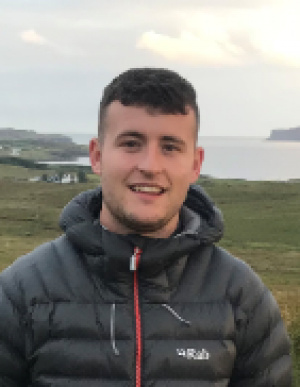
Dr Craig McDougall is a Research Fellow at European Centre for Environment and Human Health (ECEHH) at the University of Exeter and the Scottish Collaboration for Public Health Research and Policy (SCPHRP) at the University of Edinburgh. Craig led the development and validation of the wellbeing metrics in the Our Outdoors App and his research primarily focuses on how spending time in and around nature can impact human health and wellbeing.
This email address is being protected from spambots. You need JavaScript enabled to view it.
Emma Carroll-Monteil

Emma works on the GroundsWell project in science communication and research impact, with emphasis on education and training. Emma has a BA in Psychology (University of Edinburgh), a MSc in Outdoor Environmental and Sustainability Education (University of Edinburgh), and also works part time for the University of Strathclyde in Sustainability Engagement. Her background is in sustainability and pro-environmental behaviour, and she is passionate about projects that help both people and the planet.
This email address is being protected from spambots. You need JavaScript enabled to view it.
Dr Stephen Malden
Stephen is a research fellow based within SCPHRP at the University of Edinburgh. Stephen joined SCPHRP in 2015, before completing his PhD in childhood obesity/public health at the University of Strathclyde. Stephen has a varied research background having experience in health services research, health informatics, systematic reviews/meta-analyses and the development/evaluation of public health interventions. His research interests include childhood obesity, health benefits and determinants of physical activity, health inequalities, and the impact of urban greenspace on health.
This email address is being protected from spambots. You need JavaScript enabled to view it.
Professor Ruth Jepson
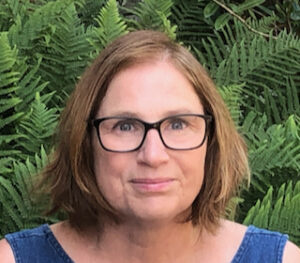
Ruth is Director of SCPHRP and a Professor of Public Health in the School of Health in Social Science, University of Edinburgh. She is co-Director of the GroundsWell Consortium (https://ukprp.org/what-we-fund/groundswell/) and a co-Investigator on PHIRST Fusion https://phirst.nihr.ac.uk/ She is particularly interested developing and evaluating complex interventions and in undertaking research in partnership with service providers and users and has recently written a book on the subject with other members of SCPHRP (Developing Public Health Interventions).
This email address is being protected from spambots. You need JavaScript enabled to view it.
Contact

Get in contact with us! We would love to hear from you.
This email address is being protected from spambots. You need JavaScript enabled to view it.
Scottish Collaboration for Public Health Research and Policy (SCPHRP)
School of Health in Social Sciences
Room 1B31 & 1B32
5 Forrest Hill
EH1 2QL
Find us on social media



This website uses no external trackers, no analytics, just session cookies and values your online privacy.
